Estimation
What Is the Difference Between a BOQ, an Estimate and a Quotation?
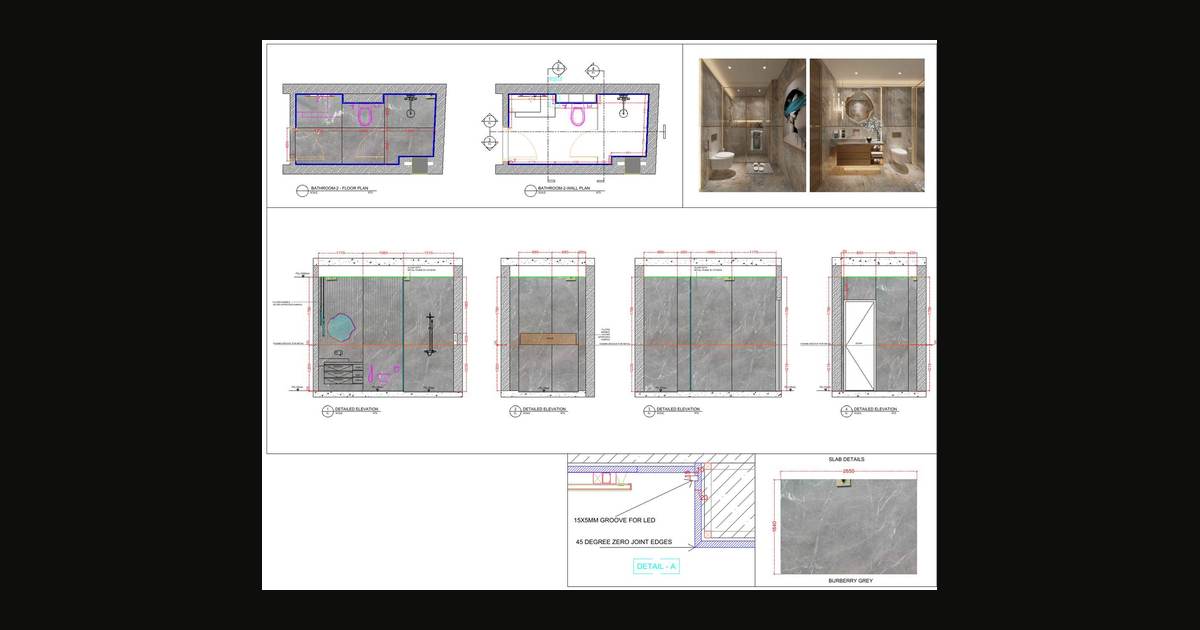
Portfolio sheet: luxury bathroom marble cladding shop drawings, D3DDD.
A bill of quantities, an estimate and a quotation are often used as if they were three names for the same spreadsheet. They are not. On construction and fit-out projects in Dubai and the wider UAE, mixing them up causes a familiar problem: someone prices the wrong document, or treats a first-pass figure as a binding offer.
This article sets out the difference in plain terms, then explains which of these documents D3DDD actually prepares. The service page is architectural estimation. For the stone-only measurement method, use the already-live guide How to calculate marble quantities and reduce waste.
A bill of quantities (BOQ)
A BOQ is a structured list of measured items, organised so a contractor or supplier can price or order from it, and so a later revision of the drawings can be compared with the previous issue. The figures come from a quantity take-off: areas, linear metres and counts, each tied to a drawing sheet, with assumptions written down rather than hidden in a total.
On D3DDD’s estimation service the BOQ is already a listed deliverable, alongside material schedules and tender packages. The spreadsheet is the working file; a PDF is issued when you need a frozen copy for a tender. If the client already has an empty bill template, the schedules follow that column order. The studio does not claim a single mandatory UAE bill format or a tender-law rule.
A BOQ is not, by itself, a price. It is the measured description of the work. Someone still has to apply rates, allowances and commercial terms to turn it into money.
An estimate (or cost plan)
An estimate is a cost view of the work, usually prepared before a formal tender is complete. It is there to compare options, check whether a design is in a realistic range, or brief a client before suppliers have all priced a final set.
D3DDD lists “cost plans” as a sub-service: early cost framing to compare options before tender. That is the sense of “estimation” in the service name, together with the measured take-off and the BOQ. An early cost plan is still based on drawings, and its assumptions still have to be written down. A plan based on a concept sketch is not the same job as a plan based on an approved, dimensioned set, and it should not be treated as if it were.
What an estimate is not: a commitment to carry out the work for that figure, and not D3DDD’s own fee for drafting or measurement. Those fees are a separate written quote, described below.
The studio does not publish a day-rate, a square-metre rate, or a standard markup. Anything that looks like a cost plan is scoped in the enquiry and confirmed in writing. This article does not invent typical UAE unit rates.
A quotation
A quotation is a priced offer. In a construction or fit-out tender, it is usually the contractor’s or supplier’s offer to the client to do defined work for a stated sum, on stated terms. It is built from a BOQ or a specification, but it is a commercial document, not a measurement.
D3DDD’s own quotation is something more specific, and it is worth keeping the two uses of the word apart. When you enquire about estimation, drafting or another service, the studio issues a written quote for that work: the scope, the fee and the delivery date, confirmed before work starts. Estimation itself is quoted per package. That quote is not a contractor’s tender return for a villa or a fit-out, and it is not a published rate list. Website package prices on the site, and the owner-approved pack prices for a marble shop-drawing pack and a single 3D render, are not estimation or contractor-tender rates.
If a contractor uses D3DDD’s BOQ to prepare their own quotation to a client, that later quotation is the contractor’s document. The accuracy of their price still depends on their rates, their reading of the assumptions, and whether they priced the same drawing revision.
How the three sit together on a UAE project
A practical sequence on a fit-out or stone package in Dubai, Abu Dhabi or Sharjah looks like this:
- The drawings are measured (the take-off).
- The measurements are organised into a BOQ and, where needed, material schedules.
- The contractor or the client may use those figures for an early estimate or cost comparison.
- Suppliers and contractors issue quotations against the bill, or against their own take-off from the same sheets.
- When the consultant comments and the drawings are revised, the quantities have to move with that issue, or the quotations and the orders will not match the approved sheets.
The estimation service page already describes that last step: the consultant comments on the drawings; the contractor uses the bill to price or to order; D3DDD updates the figures against the revised issue when that update is in the quote. A large redesign is quoted as its own step.
Stone and joinery should not be collapsed into one schedule if they will be priced by different yards. Keep the bills separate, as the live page already advises, so a marble contractor is not asked to price cabinet carcasses. Sheets the numbers can be compared with include the bathroom cladding shop drawings and the slab cutting layout. If the sheets still need to be drawn, start with architectural drafting or marble shop drawings.
What D3DDD delivers, and what it does not
From the live estimation page, a typical package can include:
- A bill of quantities organised for revision comparison
- Take-off notes that say which sheet each figure came from
- Material schedules for stone, joinery or finishes
- Spreadsheet files, plus PDF when a frozen tender copy is needed
- An updated issue when the design or the site size changes, if that update is in the quote
- Early cost framing to compare options, when that is requested
It does not include, unless separately agreed: a contractor’s priced tender return, a guarantee that a supplier will adopt the same rates, new DWG sheets in a numbers-only package, or a published unit-rate library.
What to send for a quote
To ask D3DDD to prepare a take-off, a BOQ, schedules or an early cost plan, send the current drawings, the trades to measure, any client template, and whether this is a first issue or a revision. Use the contact form. Scope, fee and delivery date are confirmed in writing before work starts.
Frequently Asked Questions
Is a BOQ a price?
No. A BOQ is a structured list of measured items. A quotation is the priced offer that may be built from that list.
Is D3DDD’s estimation quote the same as a contractor’s quotation?
No. D3DDD’s quote is the written fee and delivery date for the measurement or drafting work you asked for. A contractor’s quotation to a client is a separate commercial offer.
Can a BOQ and a cost plan be in the same package?
Yes, when both are written into the quote. A cost plan still needs its assumptions stated, and it should be labelled for the drawing issue it came from.
Do you follow a mandatory UAE bill format?
Only if you send a template. There is no single format claimed on the service page.
Request a quote
If you need a bill of quantities, a take-off or an early cost plan from a drawing set in Dubai or elsewhere in the UAE, send the files and say which document you actually need.